The Principal-Agent Problem in AI Advertising: Why Platform Algorithms Aren't Your Friends
The Principal-Agent Problem in AI Advertising: Why Platform Algorithms Aren't Your Friends
Last updated: September 29, 2026
Answer: Why aren't platform bidding algorithms on the advertiser's side?
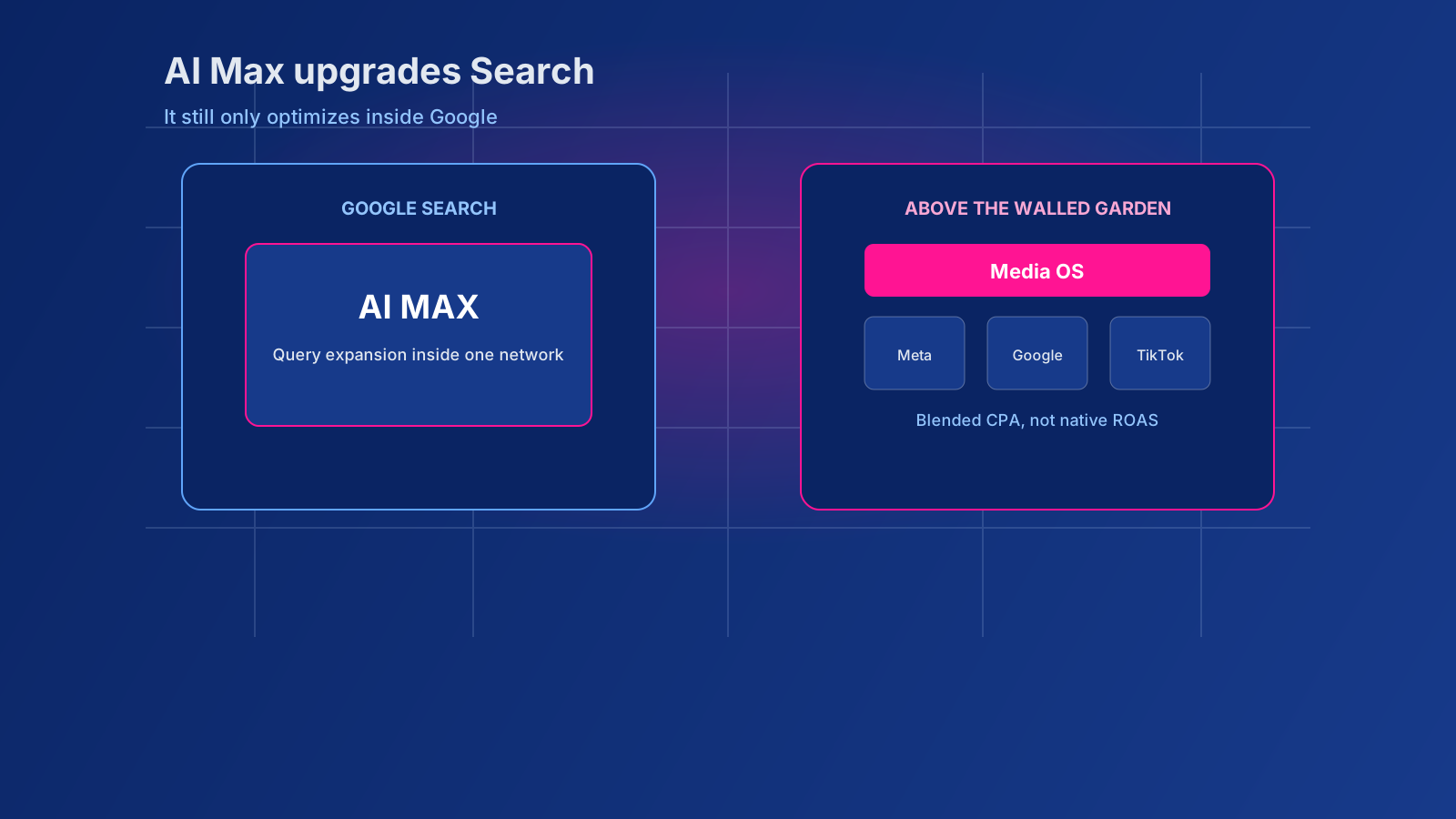
A platform bidding algorithm is not your agent. On August 17, 2026, Google changed how target-based bidding works on budget-limited campaigns. The system now spends toward the Target CPA or Target ROAS you entered, including when the campaign had been beating that number. Google was explicit about the outcome. A campaign with a $10 target CPA that had been delivering at $5 will move closer to $10, unless you change the target first.
The old efficiency was never a promise. On a budget-limited campaign, the daily budget ran out before the system entered every auction, so it cherry-picked the cheaper conversions. The budget was doing the work the target appeared to do. Google removed that side effect. The target is now closer to a price you told the machine you will pay.
That is the principal-agent problem in AI advertising. You are the principal. The buying system is an agent that also serves the platform: publisher yield, auction prices, and the platform's own growth. When your efficiency and those economics diverge, the system has no duty to pick you.
Full disclosure: we build ViVV, an autonomous media agency and marketing operating system, so we are not neutral. This is the reason a buying system should not be owned by the auction it buys in.
Bullets: What changed, and who the algorithm works for
1. The target stopped being a ceiling you could quietly beat
Until August 17, a budget-limited campaign on Target CPA or Target ROAS could outperform the target on the account. Google described the new behavior in advance: those campaigns are steered to deliver toward the target you set. Toni Poulain of Goodway Group put the industry consequence in AdExchanger on August 31, 2026. The efficiency was never yours to begin with. It was an artifact of how the platform chose to bid, and the platform can redefine it.
If a target was set at launch and never revisited, the gap between "what we typed" and "what we were actually paying" is now a live cost. The drift is the point of the change, not a glitch.
2. The agent has another principal
A platform-owned system operates inside rules the platform writes, on signals the platform controls, buying inventory the platform monetizes, and reporting through measurement the platform provides. Advertiser returns are one input. They are not the only score the system is built to protect.
In economics, a principal-agent problem shows up when the agent has information and incentives the principal does not share. Agentic media buying makes that concrete. The more control you hand over, the less you can see the moment the definition of success moves.
3. Funding the AI build-out is rational platform economics
Platforms are spending heavily to build AI infrastructure, and advertising is how that bill gets paid.
Meta's own second-quarter 2026 results are the public version of that pressure. Costs and expenses were $42.03 billion, up 55% year over year. That 55% is not an AI line item by itself. It includes $2.40 billion of legal charges and $1.18 billion of severance. The infrastructure story shows up in cash flow. Free cash flow fell to $784 million, from $8.55 billion in the year-ago quarter. Capital spending for the quarter, including principal payments on finance leases, was about $31 billion, directed at servers, data centers, and network infrastructure. Meta's 2026 capital expenditure outlook is $130 billion to $145 billion.
Capturing advertiser efficiency, either by buying more volume or by letting costs rise while a campaign still "hits target," is rational if you also have to fund that build-out. It is not evidence that the algorithm is hostile. It is evidence that it does not work for you alone.
4. The same handoff exists beyond Google
August 17 was a Google Ads change. It is not a Meta or TikTok release note. The shared risk is the handoff.
Google Performance Max, Meta Advantage+, and TikTok Smart+ each take a goal and then pace, bid, and optimize inside that platform's rules. When ViVV runs and monitors campaigns across those networks, the failure mode we watch for is the loose target: a number someone entered once, which the platform can spend toward, while the business still thinks it is getting the better result from last quarter. Handing over the goal means the ecosystem's rules go first.
5. Automate the keystrokes, not the skepticism
The industry has spent years trying to remove practitioner judgment from buying, because frictionless agents are an attractive demo. Judgment is the part that notices a quiet redefinition of success.
Governance here is specific:
- Keep an independent performance baseline, not only the platform's conversion column.
- Tie the media target to what the business will actually pay, and tighten it when delivery has been beating it for the wrong reason.
- Compare outcomes across platforms before you raise a budget to "feed the algorithm."
- Give someone who does not work for the platform the standing to pause, reset the target, or say no.
That is the job of a media buyer. An autonomous system can place the bids. It should not be the only party in the room when the target changes meaning. ViVV's Glass Box logs the decision, and a strategist still validates a major shift before budget moves. The longer argument for why a connector is not a substitute for that judgment is in what building a marketing operating system taught us.
Table: Platform agent vs an advertiser's agent
| Question | Platform-owned bidding | Independent governance |
|---|---|---|
| Who the system serves | Advertiser targets, inside the platform's auction and yield rules | The business outcome, compared across platforms |
| What a target means | A price the system will spend toward | A ceiling set from what the business will pay |
| When results beat the target | Spare room to buy volume or absorb a higher cost | A signal to bank the margin or tighten the target |
| Measurement | Platform-reported conversions | An independent baseline, plus cross-platform results |
| Who can say no | The platform's agent, after the change is live | A practitioner with standing to pause or reset |
| Best fit | Execution inside one ecosystem | Governance when efficiency and platform economics diverge |
Use the table as a test of any "fully agentic" pitch, including ours. If nobody outside the platform can see the target drift and stop it, the agent is not yours.
Quote: Someone has to be able to say no
"Automate the keystrokes. Do not automate the skepticism. When a platform quietly redefines a target, someone who does not work for that platform has to be in the room to say no."
Brandon Keenen, Founder and CEO, ViVV Labs
Poulain's column ends on the same split. Media buying still takes expertise, or the platforms have solved it for you. Only one of those leaves a person who can evaluate the next change before it hits the business.
What to do this week
- Audit every budget-limited Target CPA and Target ROAS campaign for the gap between the target on the account and the CPA or ROAS actually delivered.
- Tighten targets that were aspirational, or that have not been touched since launch.
- Do not treat a beaten target as found money. After August 17, that gap is room Google will spend into.
- Keep a record of performance that is not only the platform's own report. Blended efficiency across networks is the comparison that shows when one auction is marking its own homework.
- Decide in advance who can say no, and what evidence they need.
Questions: Frequently asked questions
What is the principal-agent problem in AI advertising?
The advertiser is the principal. A platform-owned bidding system is an agent with another principal: the platform. It buys inventory the platform monetizes, under rules the platform writes, and reports results through measurement the platform provides. When advertiser efficiency and platform economics diverge, the system has no duty to choose the advertiser.
What did Google change about Target CPA and Target ROAS?
On August 17, 2026, Google changed target-based bidding on budget-limited campaigns. Those campaigns are now steered toward the Target CPA or Target ROAS on the account, including when they had been beating that target. Google's own example: a campaign with a $10 target CPA that had been delivering at $5 will move closer to $10 unless the advertiser changes the target first.
Does this Google change also apply to Meta Advantage+ and TikTok Smart+?
No. August 17 was a Google Ads change. Meta Advantage+, TikTok Smart+, and Google Performance Max are separate systems. The shared risk is the handoff: once you give a platform-owned system your goal, pacing and optimization follow that platform's rules.
How should advertisers govern automated bidding?
Keep an independent performance baseline, tie media targets to what the business will actually pay, compare results across platforms, and give a person the standing to pause a strategy when the definition of success moves. Automate the execution. Do not automate the skepticism.
The bottom line
Google did not hide this change. It described it, and then it shipped it. The useful lesson is not that one bid strategy got worse. It is that efficiency produced inside a platform auction can be reassigned by that platform, and an agent owned by the auction will not argue with the reassignment.
If you are testing automated buying, keep a person on the hook for the target. If you need that governance built into the system that places the bids, see how ViVV works or apply for cohort access.
About the author
Brandon Keenen is Founder and CEO of ViVV Labs (Mohitso Media Limited). ViVV is an autonomous media agency for high-growth brands. Senior strategists set the direction, and the Glass Box Autonomous Engine manages paid media across Meta, Google, TikTok, and LinkedIn. The system is built on 30+ years of combined marketing experience.
Sources
Poulain, Toni. "Google's Bidding Change Proves Agentic Advertising Has An Agency Problem." AdExchanger, August 31, 2026. Read the column.
Meta Platforms. "Meta Reports Second Quarter 2026 Results." July 29, 2026. Costs and expenses, free cash flow, and capital expenditure figures are from this release. Read the results.