Lifestage Beats Age: What Meta's Generation Zeitgeist 2026 Means for Marketers
Lifestage Beats Age: What Meta's Generation Zeitgeist 2026 Means for Marketers
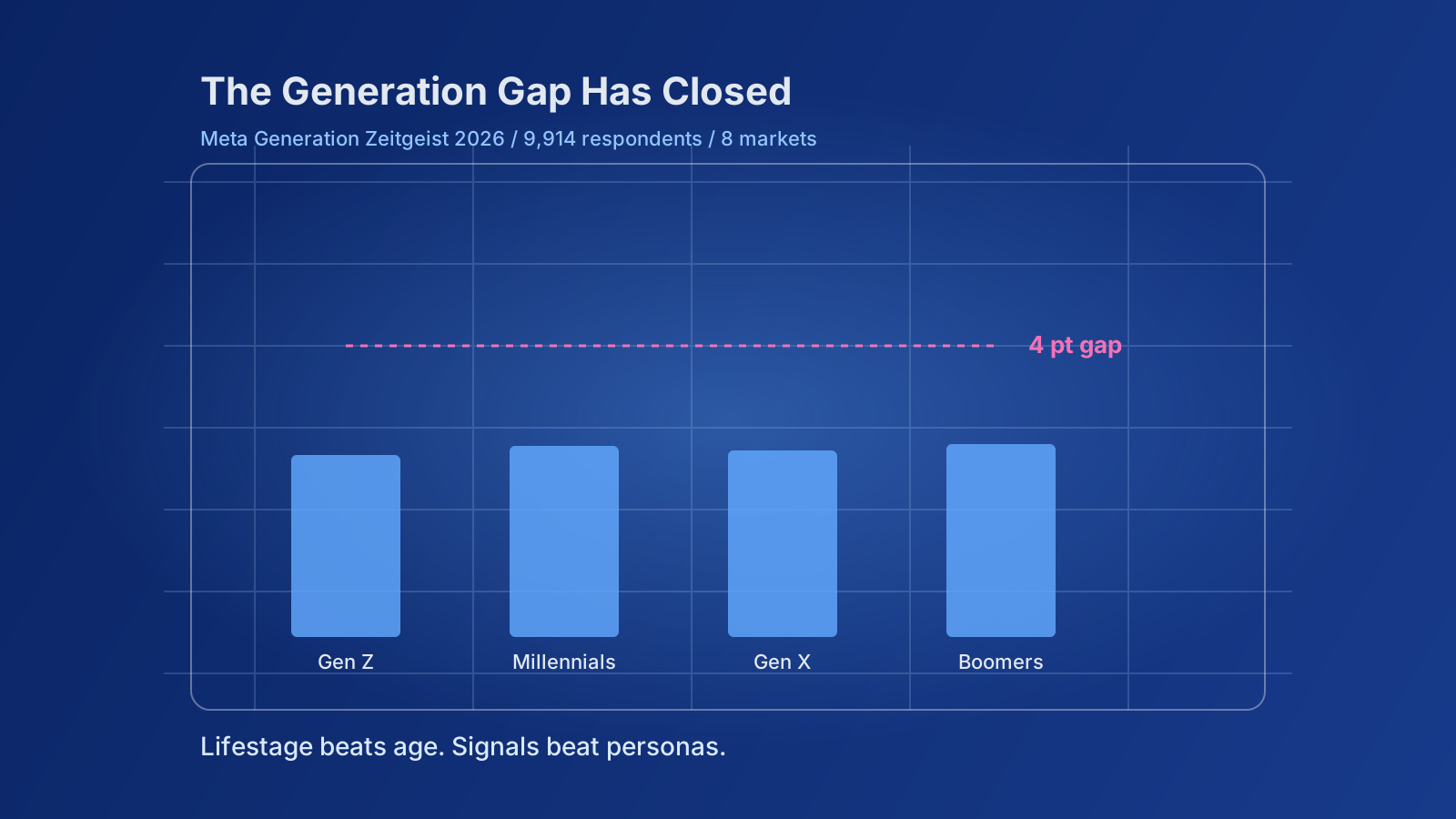
Meta's Generation Zeitgeist 2026 just published a stat that should reset every audience strategy in the building. The gap between Gen Z and Boomers on why they use Meta apps is four percentage points. Not forty. Not fourteen. Four. Lifestage moves purchase intent by up to 26 points. Curation behavior moves engagement by up to 47 points. The persona deck has stopped predicting behavior. Demographic targeting as a primary lever is over.
For a decade, the entire industry has run on generations. Gen Z brief, Millennial brief, Gen X brief, Boomer brief. Different creative, different channels, different language. That playbook just got publicly retired by the platform that benefits most from precise targeting.
The implication is not that you need a better persona deck. It is that the unit of targeting has changed. You are no longer buying cohorts. You are buying signals. And signals do not move at the speed of a quarterly planning cycle.
And: We Built a Decade of Strategy on Generations
The generational playbook has been the default operating system for audience marketing since roughly 2015.
It has its own language. Digital natives. Tourists. Specialist translation. It has its own org structure - youth specialists, multigenerational teams, "Boomer briefs." It has its own creative process - separate hero films per cohort, separate decks, separate channel mixes. It has its own targeting trees - age brackets nested above interest, geography, and behavior, on every ad platform.
It worked when cultural reference points were shared inside cohorts and lifestages were predictable across them. A 25 year old looked broadly like other 25 year olds. A 55 year old looked broadly like other 55 year olds. The cohort was a useful proxy.
That world has quietly ended.
But: The Generation Gap Just Closed in Public
Meta's Generation Zeitgeist 2026, run with BAMM Global, surveyed 9,914 people across eight markets and four generations - Gen Z, Millennials, Gen X, and Boomers. It is the largest cross-generational behavioral study they have published.
The headline numbers are not subtle.
- Four points. That is the gap between Gen Z and Boomers across the top six reasons people use Meta apps.
- 26 points. That is how much purchase intent rises when someone is in a key lifestage like graduating, getting married, buying a home, or having a baby - regardless of age.
- 47 points. That is the gap between "curators" who actively tailor their feeds and people who don't, on engagement and intent.
- Almost 9 in 10. That is the share of people across all four generations who share photos, videos and memes to stay in touch. The numbers barely shift by age.
- Short-form video is the preferred content format for every generation. Including Gen X. Including Boomers.
- 81% rate creator expert knowledge as the most important attribute. Fame came last.
- 75% regularly view content from accounts they don't follow. That rises to 85% for Gen Z and Millennials. AI has decoupled discovery from following.
- 85% of Gen Z discover products on social. 58% on search engines. A 27 point gap on the question of where commerce begins.
- 98% see value in messaging brands. Only 68% have done it. A 30 point demand gap waiting to be closed.
- 69% across all generations would find an AI agent valuable for product recommendations. Not just younger cohorts. All of them.
Every one of those numbers points at the same conclusion. Age is no longer the predictive variable. Behavior is. Lifestage is. Curation is. Intent is. What someone forwarded to a friend yesterday is.
"Every segmentation strategy that survives 2026 will be a system, not a deck. Demographics are a label. Lifestage is a signal. The brands that win this year will be the ones whose creative, bidding, and orchestration all run off signals, not personas."
Brandon Keenen, Co-founder and CEO, ViVV Labs
Therefore: Targeting Has to Move From Demographics to Signals
This is the part most strategy teams will get wrong. The temptation will be to add lifestage as an extra layer on top of the existing persona stack. Build a "new mum, age 28, urban" segment. Tag it. Bid on it. Carry on.
That is not the move. The move is to invert the stack.
| Old Playbook (2016 - 2025) | New Playbook (2026+) |
|---|---|
| Demographic personas as the targeting unit | Lifestage and behavioral signals as the targeting unit |
| Manual creative tailored per generation | Variety-led creative generated and tested at scale |
| Channel-by-channel media plan with a separate deck per cohort | Cross-surface orchestration based on real-time signals |
| Search captures intent | Social creates intent. Search captures the trailing tail |
| Broadcast campaigns with a single hero asset | Same message, many executions. The algorithm sorts |
| Influencer = celebrity or face with millions of followers | Creator = subject-matter expert with niche resonance |
| Funnel handoffs between awareness, consideration, conversion | DM-led conversational commerce that compresses the funnel |
| Quarterly planning cycle, brief in, asset out | Continuous closed-loop optimisation, signal in, action out |
The implication for media spend is structural. Most planning software, most agency org charts, most creative briefs, most targeting trees - all of them assume the cohort is the predictive variable. Meta has now told you, with 9,914 data points, that it isn't.
What is predictive? Lifestage. Curation behavior. Active interest signals. What someone tapped, saved, dwelled on, scroll-backed, or DM'd a brand about. Whether they are house-hunting this month. Whether they just had a baby. Whether they are forwarding tutorials to a friend who just took up a hobby.
These are not signals a planner can manually segment for. They are signals an agentic system has to read, weigh, and act on, in real time, across every surface where your customer might appear.
The Three System Requirements
There are three things your stack actually needs in this new world. None of them are a brief.
1. Creative variety as the new targeting. With 52% of people welcoming different versions of the same ad - rising to 88% including maybes - "one hero plus one cutdown" is no longer a campaign. The brief is now same message, many executions. You need 20 to 50 variants per offer per surface, generated, tested and pruned continuously, because the algorithm rewards variation and people themselves told Meta the top reason they skip ads is seeing the exact same execution too many times. Humans cannot operate that frequency. Creative agents can.
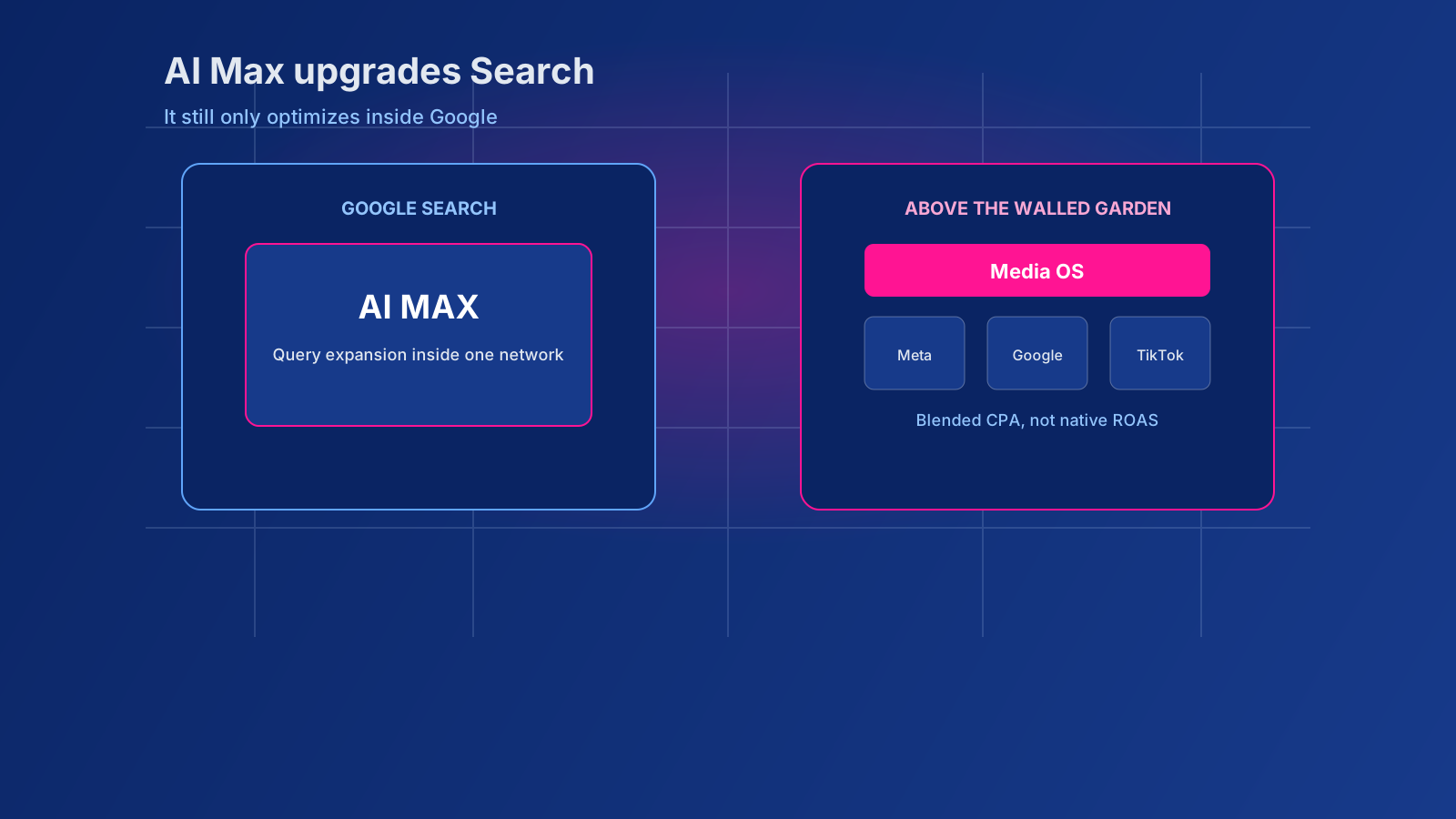
2. Cross-surface orchestration as the default. Gen Z navigates 2.9 social surfaces just to discover a product, and the same is increasingly true at every age. If your media buyer optimises Meta in isolation while your search agency optimises Google in isolation, you have two systems competing for the same dollar with no shared view of the customer. Platform-native AI like Advantage Plus and Performance Max will never recommend moving budget away from itself. An agentic marketing system sits above all platforms and optimises the business, not the channel.
3. Conversation as a primary channel. A 30 point gap between people who see value in messaging brands (98%) and people who have actually done it (68%) is one of the largest greenfield opportunities in the report. Click-to-Message, AI-powered DMs, and persistent conversation memory are the new landing page. With 7 in 10 of every generation interested in an AI agent for product recommendations, conversational commerce is no longer a younger-demographic preference. It is a market-wide expectation about to become a baseline.
The Five Principles, Restated for an Agentic World
Meta's report closes with five principles. Restated through the lens of what they actually require to execute:
- Lifestage > Age → You need a system that detects lifestage signals across surfaces and adjusts bids in real time.
- Variety > Monotony → You need creative agents that generate, test and prune at a frequency no human team can match.
- Expertise > Popularity → You need creator partnerships scored on fit, not follower count, with paid amplification routed by relevance.
- Social > Search → You need to rebalance discovery spend toward the surfaces where intent is being created.
- DMs > Broadcast → You need conversational commerce infrastructure, not just ad units.
Each of these is a system requirement. None is a slide.
Q: Is Your Strategy Built for Personas, or Signals?
The Generation Zeitgeist 2026 data is public proof of something every performance marketer has been feeling for two years - the persona deck has stopped predicting behavior. The interesting question now is whether the rest of your stack has caught up.
If your campaign briefs still open with "Gen Z females, 18-24, urban, value-conscious," ask the harder question. What lifestage are they in this quarter? What did they curate this week? What did they forward to a friend yesterday? What did they message a brand about? Those are the signals that move the needle. None of them are on the persona slide.
If your media plan still has separate line items for Gen Z and Millennials but no line item for "lifestage triggers" or "high-intent curators," what is it actually optimising for?
If your creative process produces one hero asset per quarter when the algorithm rewards 20 variants per week, where is the variety coming from?
If your discovery budget is still 70% search when 85% of Gen Z (and a majority of every other generation) discover on social, what behavior is your spend actually funding?
The brands moving fastest in 2026 are not better at targeting. They are better at reading signals and acting on them at machine speed across every surface where the customer shows up. That is what an agentic marketing system is for. The generational playbook served us well when cultural reference points were shared and lifestages were predictable. Neither is true anymore.
The gap has closed. The question is whether your strategy has caught up.
Source: Meta for Business, Generation Zeitgeist 2026
If you want to go deeper on related strategy questions, read Can AI Actually Run My Paid Ad Campaigns in 2026?, Manus vs Claude Code vs Agentic Marketing, and The End of the Marketing Argument.
About ViVV Labs
ViVV Labs is an Autonomous Media Agency. Senior strategists set the direction. The Glass Box Autonomous Engine executes across Meta, Google and TikTok with full decision transparency. We work with a small number of brands per quarter through selective cohort intake.